 The Well Nourish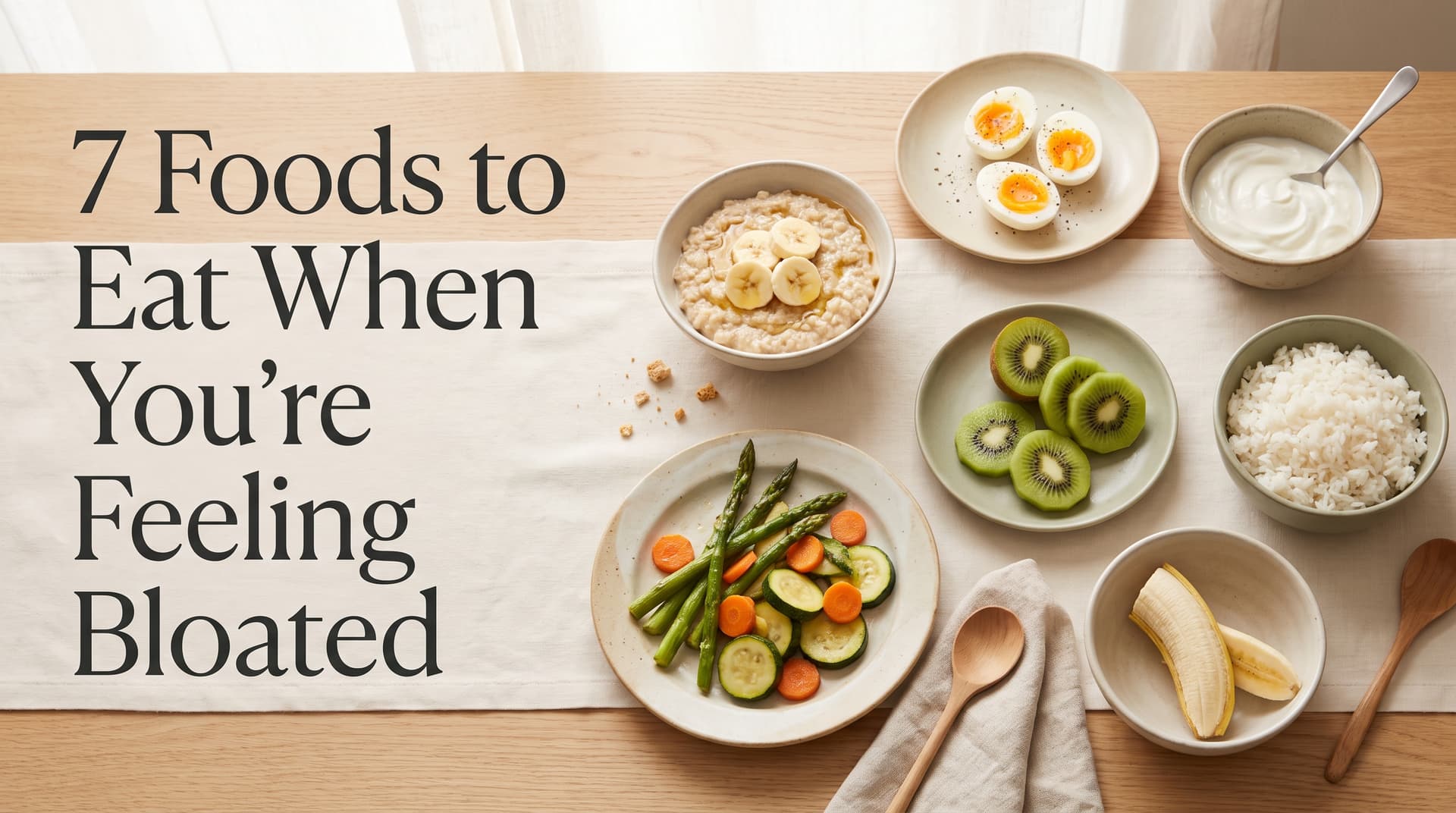
February 2, 2026
7 Foods to Eat When You're Feeling Bloated
Save this article for later! And if you find it helpful, save the Pin so you can easily find it again.
Feeling bloated can make food feel like the last thing you want to think about. You may wonder whether you should skip a meal, eat as little as possible, or cut out a long list of foods.
A better starting point is usually simpler: choose familiar foods, keep portions comfortable, and pay attention to what your own body tolerates.
There is no single "anti-bloat food" that works for everyone. Bloating can have different causes, and foods that feel comfortable for one person may bother another.
Quick Answer: 7 Foods to Try When You're Feeling Bloated
If your stomach feels full, swollen, or uncomfortable, seven simple foods worth considering are:
- •Oats
- •Bananas
- •Kiwi
- •Rice
- •Eggs
- •Cooked vegetables
- •Plain yogurt or a lactose-free alternative, if tolerated
The right choice depends on your symptoms, usual diet, portion size, and individual tolerance.
1. Oats
Oats provide soluble fiber and can be an easy breakfast or meal base. Fiber can support regular bowel movements, although increasing fiber too quickly can also cause gas or bloating in some people.
If you already eat oats comfortably, a simple bowl can be an easy choice on a day when you want something familiar.
Try
- •Cooked oats with banana
- •Oats with kiwi
- •A smaller bowl of oatmeal with a little cinnamon
If a large serving leaves you uncomfortable, try a smaller portion rather than assuming oats are automatically the problem.
2. Bananas
Bananas are an easy food to keep around and can be useful when you want something simple.
A banana can work on its own, alongside oats, or with plain yogurt if you tolerate dairy. Individual tolerance matters more than a universal "good food" label.
Try
- •A banana with oatmeal
- •Banana with a small serving of yogurt
- •A simple banana snack between meals
3. Kiwi
Kiwi can be a practical fruit option when you want something fresh without building a complicated meal.
Fruit tolerance varies from person to person. If fruit sometimes makes you feel more bloated, start with a small serving and pay attention to your response.
Try
- •Kiwi alongside breakfast
- •Sliced kiwi with oats
- •Kiwi as a simple afternoon snack
4. Rice
Plain rice is a simple, familiar carbohydrate that can be useful when you want to keep a meal straightforward.
Pair it with a protein and a cooked vegetable you already know you tolerate instead of piling on lots of ingredients.
Try
- •Rice + egg + cooked carrots
- •Rice + chicken + cooked zucchini
- •A small rice bowl with a simple protein and vegetables
5. Eggs
Eggs can make a meal more filling without requiring a complicated recipe. They pair easily with simple carbohydrates and cooked vegetables.
Try
- •Scrambled eggs + toast
- •Boiled eggs + rice
- •Egg + cooked vegetables
Free Guide
Want the Full 14-Day System?
Start with our free 3-Day Bloat Reset — days 1–3 of the 14-Day Gut Reset, straight to your inbox.
We respect your privacy. Unsubscribe at anytime.
6. Cooked Vegetables
Vegetables are an important part of a balanced eating pattern, but the way you prepare them may matter for comfort.
Some people find certain vegetables or large portions increase gas symptoms. If raw vegetables feel too bulky when your stomach is uncomfortable, try a smaller portion of cooked vegetables you already tolerate.
Try
- •Cooked carrots
- •Zucchini
- •Spinach
- •A small serving of cooked vegetables with rice and eggs
7. Plain Yogurt or a Lactose-Free Alternative
Yogurt can be an easy protein-rich addition to breakfast or a snack, but dairy tolerance varies.
People with lactose intolerance can experience bloating, gas, abdominal pain, or diarrhea after consuming lactose. Some people can tolerate some lactose without symptoms, so the amount and product can matter.
If dairy seems to bother you, do not assume every dairy product will affect you identically. A lactose-free alternative may be worth considering, or discuss recurring symptoms with a healthcare professional or dietitian.
What Should You Actually Eat on a Bloated Day?
You do not need to combine all seven foods into one giant "gut-friendly" meal.
A simpler approach is to choose one familiar carbohydrate, one protein, and one fruit or cooked vegetable that you already tolerate.
A Simple Bloat-Friendly Grocery List
If you want to keep a few easy options available, start with:
- •Oats
- •Bananas
- •Kiwi
- •Rice
- •Eggs
- •Carrots
- •Zucchini
- •Spinach
- •Plain yogurt or lactose-free yogurt
- •A simple protein such as chicken
Choose foods you already know you tolerate when possible. A grocery list should reduce decision fatigue, not become a rigid list of foods you are "allowed" to eat.
What About Foods You Should Avoid?
There is no universal list of foods everyone needs to avoid when bloated.
Some people notice more symptoms after fizzy drinks, large amounts of certain carbohydrates, high-fat meals, or particular foods they personally do not tolerate.
Rather than removing everything at once, track the pattern: What did I eat? → How much? → How quickly? → What symptoms appeared?
A food diary can help you and, if needed, your healthcare professional identify patterns.
Want a Few Easy Gut-Friendly Recipes?
Get the free 5 Gut-Friendly Recipes guide and keep a few simple ideas handy for your next grocery trip.
When Bloating Keeps Happening
Occasional bloating can happen for many reasons, but recurring or troublesome symptoms deserve attention.
Talk with a healthcare professional if your symptoms bother you, change suddenly, or occur alongside abdominal pain, constipation, diarrhea, weight loss, persistent swelling, vomiting, or other concerning symptoms.
The Bottom Line
When you are feeling bloated, you do not need a complicated diet.
Start with foods you already tolerate, keep portions comfortable, and simplify the meal. Oats, bananas, kiwi, rice, eggs, cooked vegetables, and plain or lactose-free yogurt can all be useful options for some people, but none is guaranteed to work for everyone.
The most useful "bloat-friendly" food is often the one that feels comfortable for your own body.
Start simple, notice patterns, and make one change at a time.
Frequently Asked Questions
Can I eat fruit when I'm bloated?
Yes, but individual tolerance varies. Start with a portion and notice how you respond.
Should I stop eating fiber when I'm bloated?
Not automatically. Fiber can support bowel regularity, but increasing it too quickly can increase gas and bloating for some people. Add fiber gradually.
Is yogurt good for bloating?
It depends. Some people tolerate yogurt well, while people with lactose intolerance may experience symptoms. A lactose-free option may be more comfortable.
Should I skip meals if I feel bloated?
Not necessarily. A smaller, simpler meal may be more practical than skipping food entirely. If eating repeatedly causes significant symptoms, discuss the pattern with a healthcare professional.
When should I see a doctor?
Seek medical advice if bloating is persistent, worsening, suddenly changes, or occurs with significant pain, vomiting, weight loss, blood in stool, or ongoing bowel changes.
Keep Exploring
January 19, 2026
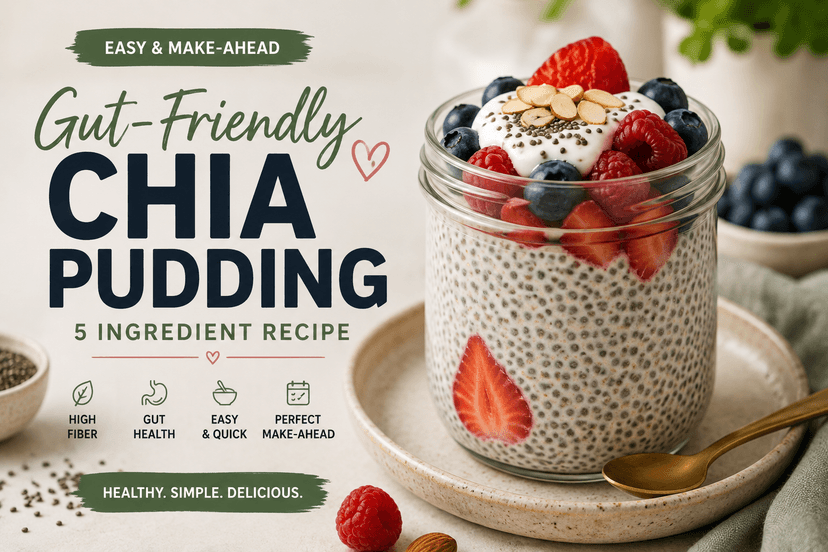
Gut-Friendly Chia Pudding Recipe
Creamy, simple, and easy to prepare ahead — this gut-friendly chia pudding combines chia seeds, Greek yogurt, berries and milk for a nourishing breakfast you can prepare the night before.
January 12, 2026
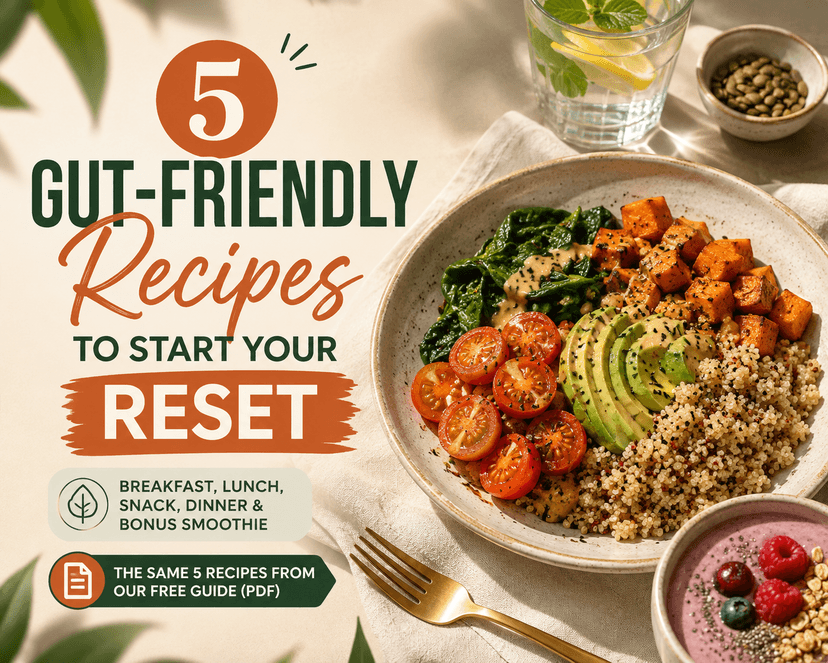
5 Gut-Friendly Recipes to Start Your Reset
A gut-friendly breakfast, lunch, snack, dinner, and bonus smoothie — the same five recipes from our free guide, straight from the PDF.
Want a Complete 14-Day Plan?
If you would rather follow a structured plan than figure out every meal yourself, the 14-Day Gut Reset brings meals, a grocery list and a tracker together in one simple system.
Get the 14-Day Gut Reset