 The Well Nourish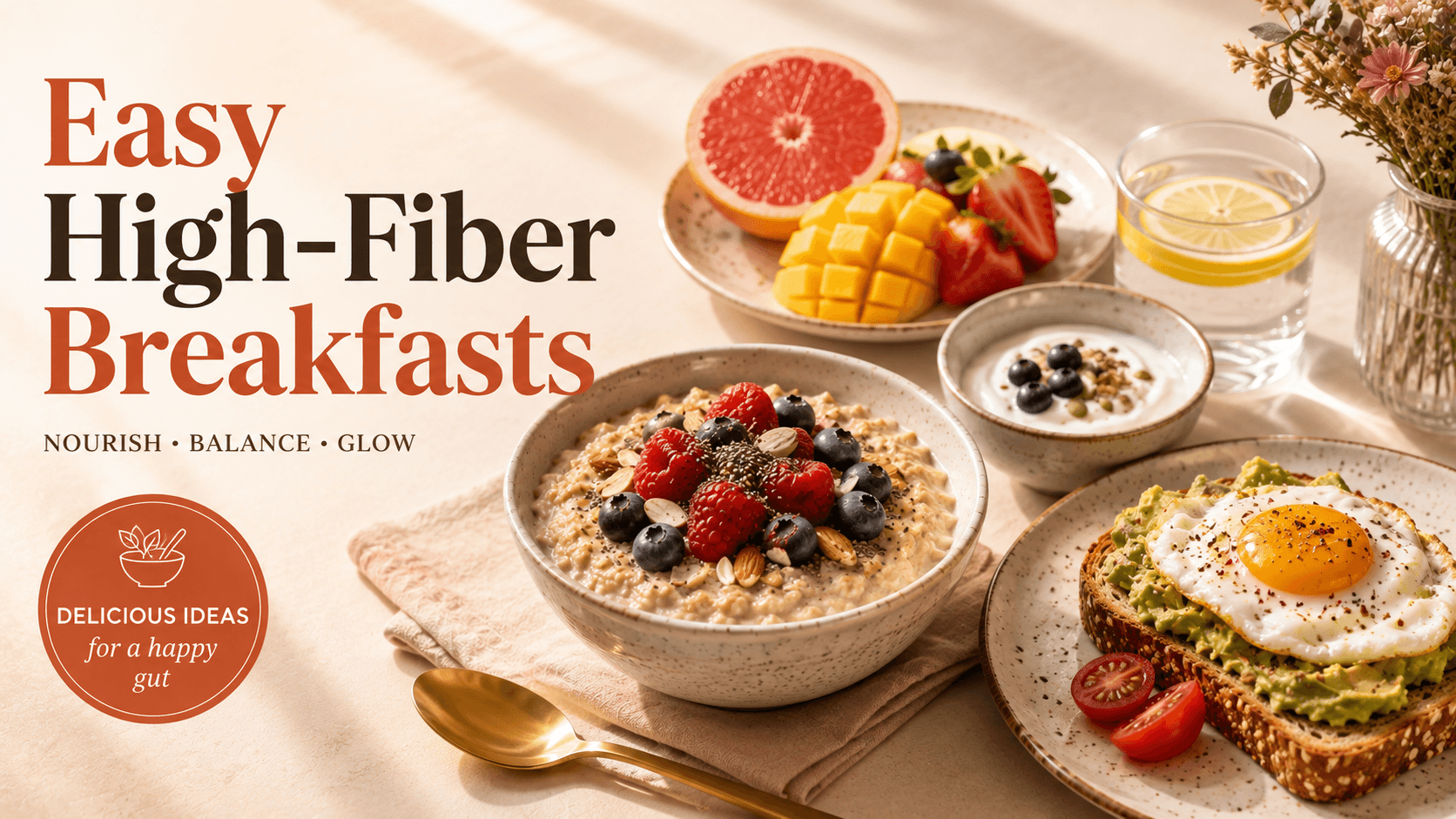
March 2, 2026
Easy High-Fiber Breakfasts for Better Digestion & Lasting Energy
Save this article for later! And if you find it helpful, save the Pin so you can easily find it again.
You decide to eat healthier, so you start adding oats, chia seeds, fruit, whole-grain toast, and maybe a smoothie to your mornings. At first, it feels like a great change. But then your stomach feels unusually full, uncomfortable, or bloated.
If this sounds familiar, you may be wondering whether a breakfast that is supposed to be healthy can actually contain too much fiber for you. Fiber is an important part of a balanced diet, but increasing it suddenly can be uncomfortable for some people.
The goal is not to avoid fiber. It is to find a practical way to include it gradually while paying attention to your individual tolerance — and you do not need complicated recipes to build a high-fiber breakfast.
Quick Answer
Easy high-fiber breakfasts can include oatmeal with berries, whole-grain toast with eggs, chia pudding, fruit with yogurt, or a smoothie with oats.
Fiber can support regular bowel movements and is an important part of a balanced diet. However, increasing fiber gradually and drinking enough fluids can be a more comfortable approach than suddenly adding large amounts.
If you regularly experience bloating, constipation, or other digestive symptoms, pay attention to patterns rather than assuming that every high-fiber food is the problem.
1. Why Is Fiber Important?
Fiber is a type of carbohydrate that your body does not fully digest. It is found naturally in oats, fruits, vegetables, beans and lentils, whole grains, and nuts and seeds.
Different types of fiber have different effects. Some fiber helps add bulk to stool, while other types can be fermented by gut bacteria. This is one reason fiber can help digestion, but also why suddenly increasing it may cause gas or bloating in some people.
The important thing is to think about your overall diet rather than focusing on one "superfood." A breakfast with oats, fruit, and yogurt can be a useful option, but if you are not used to eating much fiber, you may feel better starting with a smaller portion.
What to try
- •Instead of adding several high-fiber ingredients at once, choose one — for example, oats + berries + yogurt — and keep the rest of the meal simple. Notice how you feel.
2. Oatmeal Is One of the Easiest High-Fiber Breakfasts
Oatmeal is practical because it is easy to prepare, affordable, and simple to customize. Cook oats with milk or water, then add fruit, seeds, or yogurt.
A basic combination might be oats + banana + cinnamon, or oats + berries + yogurt. You can also add a small amount of nut butter for a richer flavor. You do not need to turn oatmeal into a huge bowl containing every ingredient in your kitchen.
What to try
- •If you are new to higher-fiber breakfasts, start with a portion that feels comfortable.
- •If you want to increase fiber, do so gradually.
- •If a particular combination repeatedly causes discomfort, keep a simple note rather than immediately removing every ingredient.
3. Berries Can Add Fiber and Natural Sweetness
Strawberries, blueberries, raspberries, and blackberries can be added to oatmeal, yogurt, chia pudding, or smoothies. They also provide natural sweetness, which can make breakfast more enjoyable without a lot of added sugar.
Fruit contains different types and amounts of carbohydrates, and individual tolerance can vary. If a large serving of fruit feels uncomfortable, try a smaller portion.
What to try
- •Oatmeal + blueberries
- •Yogurt + strawberries + oats
- •Toast + egg + a small portion of fruit
4. Chia Seeds Can Be Useful, but Start Gradually
Chia seeds are often added to breakfast because they provide fiber and can absorb liquid to create a thicker texture. Try yogurt + chia seeds + berries, or oats + chia seeds + banana.
Chia seeds are also a concentrated source of fiber. If you suddenly add a large amount to a diet that is otherwise low in fiber, you may experience discomfort. Start with a smaller amount, allow your body time to adjust, and keep fluids in mind. For more ideas, explore Chia Pudding Variations.
5. Whole-Grain Toast Can Make Breakfast More Satisfying
Whole-grain toast is another simple way to include fiber. Pair it with eggs, avocado, nut butter, yogurt on the side, or a small portion of fruit.
For example, whole-grain toast + egg + avocado provides a simple mix of carbohydrates, protein, and healthy fats. If you prefer something lighter, have toast with a smaller portion of fruit and eat again later.
6. A High-Fiber Breakfast Does Not Need to Be Complicated
A simple breakfast can be enough.
- •Oatmeal + berries + yogurt
- •Egg + whole-grain toast + fruit
- •Chia pudding + banana
- •Smoothie + oats
- •Yogurt + fruit + seeds
If you enjoy smoothies, explore Gut-Friendly Smoothie Ideas. For more breakfast inspiration, read Gut-Friendly Breakfast Ideas. The goal is to build a few reliable options you can repeat without overthinking.
Free Guide
Want the Full 14-Day System?
Start with our free 3-Day Bloat Reset — days 1–3 of the 14-Day Gut Reset, straight to your inbox.
We respect your privacy. Unsubscribe at anytime.
7. Why Can More Fiber Sometimes Cause Bloating?
Fiber is beneficial, but your digestive system may need time to adjust when you increase it. Someone who usually eats a low-fiber breakfast might suddenly add a large bowl of oats, chia seeds, flaxseeds, several servings of fruit, whole-grain toast, and a fiber supplement.
Each ingredient may seem reasonable individually. But together, the total amount of fiber may be much higher than the person is used to eating, which can contribute to gas or bloating in some people.
What to try
- •Day 1: Add a small portion of oats.
- •Day 2: Keep the same breakfast and notice your response.
- •Day 3: If comfortable, experiment with another small change.
You are not trying to eat as much fiber as possible. You are trying to build a routine that feels sustainable.
8. Fluids Matter When You Increase Fiber
Fiber and fluids work together in the digestive system. If you increase fiber but do not pay attention to your fluid intake, you may find that your digestion feels different. This does not mean you need to force excessive amounts of water — regular fluid intake is simply an important part of a balanced eating routine.
Keep a glass of water with breakfast if you enjoy it, and drink fluids regularly throughout the day. If you have a medical condition that requires fluid restrictions, follow your healthcare professional's advice.
9. What If You Are Constipated?
Sometimes bloating is not actually caused by breakfast. If your bowel movements have become less frequent or difficult, you may already be experiencing changes in your digestive system before you eat. The timing can be misleading: you eat breakfast, you feel bloated, and you blame breakfast — but the underlying issue may have started earlier.
If constipation is contributing to discomfort, fiber-rich foods may be useful for some people, though individual tolerance still matters.
Ask yourself
- •Have your bowel habits changed recently?
- •Have you suddenly increased or decreased fiber?
- •Are you drinking enough fluids?
- •Are you moving regularly?
- •Are you consistently ignoring the urge to use the bathroom?
If constipation is persistent or you have other concerning symptoms, speak with a healthcare professional.
10. How to Build a High-Fiber Breakfast Without Overdoing It
A useful approach is to start with a familiar breakfast and make one small change.
- •If you usually eat toast, try adding a small portion of fruit.
- •If you usually eat yogurt, try adding oats or a few berries.
- •If you usually eat eggs, try pairing them with whole-grain toast.
- •If you usually drink a smoothie, try adding a small amount of oats.
- •If you usually skip breakfast, try a simple meal that feels manageable, such as yogurt with fruit or toast with an egg.
11. A Simple Three-Day Fiber Breakfast Experiment
If you are unsure how much fiber feels comfortable for you, try a simple three-day experiment. The goal is not to find a perfect breakfast — it is to notice how your body responds to small changes.
If you notice discomfort, simplify the meal and change one thing at a time.
12. What If You Feel Bloated After a High-Fiber Breakfast?
A high-fiber breakfast can be nutritious and still feel uncomfortable. This does not automatically mean fiber is bad for you — it may mean that the portion, combination, or timing is not working well for your individual digestion.
For example, you might tolerate oats and banana but feel uncomfortable after oats, banana, chia, yogurt, nut butter, and a large coffee. Portion, combination, ingredients, timing, and individual tolerance can all matter.
What to try
- •Instead of removing every high-fiber food, simplify your breakfast — for example, oats + berries + yogurt, or egg + toast + fruit. Keep a simple note of what you ate and how you felt.
13. Make High-Fiber Breakfasts Part of Your Routine
The best breakfast is one that you can prepare consistently. You might choose a simple rotation:
You can repeat meals you enjoy and adjust them according to your appetite. For more practical meal ideas, explore 5 Gut-Friendly Recipes. To build a more structured routine, the Beginner's Guide to a Gut-Friendly Meal Plan can help you get started.
14. When Should You Take Digestive Symptoms Seriously?
Occasional bloating can happen for many ordinary reasons. But if you are regularly bloated, the symptoms are getting worse, or dietary changes are not helping, it is worth discussing them with a healthcare professional.
Seek medical advice particularly if bloating occurs with symptoms such as unintentional weight loss, blood in your stool, persistent or significant abdominal pain, repeated vomiting, ongoing diarrhea or constipation, or a sudden change in your usual symptoms.
The Bottom Line
Fiber is an important part of a balanced diet, but increasing it suddenly can be uncomfortable for some people. You do not need to avoid fiber — you simply need to find a practical way to include it gradually.
Start with simple breakfasts. Choose foods you enjoy. Pay attention to portion size. And if you notice discomfort, change one thing at a time. The goal is not to create a perfect breakfast, but to build a routine that feels nourishing, comfortable, and realistic to maintain.
Frequently Asked Questions
What are the easiest high-fiber breakfast foods?
Oats, berries, whole-grain toast, chia seeds, fruit, and yogurt can all be part of a simple high-fiber breakfast. Start with foods you enjoy and increase fiber gradually.
Is oatmeal a good high-fiber breakfast?
Oatmeal is a practical source of fiber and can be combined with fruit, yogurt, or seeds. However, if you are not used to eating much fiber, start with a portion that feels comfortable.
Can eating too much fiber cause bloating?
Suddenly increasing fiber can cause gas or bloating in some people. Increasing fiber gradually and paying attention to your individual tolerance may be a more comfortable approach.
Should I stop eating fiber if I feel bloated?
Not necessarily. Fiber is an important part of a balanced diet. If you notice discomfort, try simplifying your breakfast, reducing the portion, and changing one thing at a time.
How can I increase fiber without feeling uncomfortable?
Start with one fiber-rich food, increase gradually, and keep fluids in mind. You do not need to add several new high-fiber foods to the same meal.
When should I see a doctor about bloating?
Speak with a healthcare professional if bloating is frequent, persistent, worsening, or accompanied by symptoms such as unexplained weight loss, blood in the stool, significant pain, vomiting, or ongoing bowel changes.
Keep Exploring
March 9, 2026
Gut-Friendly Breakfast Ideas for a More Comfortable, Nourishing Morning
Simple gut-friendly breakfast ideas built on fiber, protein, and easy-to-digest ingredients — plus practical tips on portions, pace, and noticing what works for your digestion.
February 23, 2026
Chia Pudding Variations: 7 Gut-Friendly Recipes for Easy Breakfasts
Seven simple chia pudding variations — strawberry vanilla, blueberry cinnamon, chocolate banana, and more — that you can prep the night before for a fiber-rich, gut-friendly breakfast.

April 13, 2026
Gut-Friendly Smoothie Ideas: 7 Easy Recipes for a Comfortable Breakfast
Seven simple smoothie recipes — banana cinnamon, berry yogurt, mango ginger, and more — plus a balanced-smoothie formula and tips for keeping them easy on digestion.
Want More Gut-Friendly Recipes?
If you would rather follow a structured plan than figure out every meal yourself, the 14-Day Gut Reset brings the meals, grocery list, and tracker together in one simple system.
Get the 14-Day Gut Reset