 The Well Nourish
January 26, 2026
Why Am I Bloated After Breakfast? 7 Possible Reasons + What to Try
Save this article for later! And if you find it helpful, save the Pin so you can easily find it again.
You wake up feeling fine, eat breakfast, and then suddenly your stomach feels full, tight, or uncomfortable.
If this happens regularly, it can be frustrating — especially when your breakfast looks perfectly "healthy."
The important thing to know is that morning bloating does not automatically mean you are eating badly. Bloating can happen for several different reasons, including eating quickly, swallowing extra air, certain carbohydrates, food intolerances, constipation, or an underlying digestive condition.
Instead of immediately cutting out half your kitchen, start by looking at what is happening around breakfast.
Quick Answer: Why Might Breakfast Make You Bloated?
Breakfast may leave you feeling bloated because of:
- •Eating too quickly or swallowing extra air
- •Having a large breakfast after a long overnight fast
- •Eating foods that ferment easily in the gut
- •A food intolerance or sensitivity
- •Increasing fiber too quickly
- •Constipation or slower bowel movements
- •An underlying digestive issue such as IBS
The goal is not to assume that one of these is definitely your problem. It is to notice patterns and make small, reasonable changes.
1. You're Eating Breakfast Too Quickly
Your morning may be busy. You make breakfast, check your phone, answer a few messages, take a couple of bites, and suddenly you're halfway through the meal without really noticing.
Eating quickly can cause you to swallow more air. Swallowed air is one of the normal ways gas enters the digestive tract, and eating or drinking quickly can increase how much air you swallow.
What to Try
- •Sit down rather than eating while rushing around.
- •Take smaller bites.
- •Chew thoroughly.
- •Put your fork down occasionally.
- •Avoid fizzy drinks alongside breakfast.
- •Give yourself a little more time before rushing into the next task.
2. Your Breakfast Is Larger Than Your Stomach Is Comfortable With
A breakfast can be nutritious and still be more food than feels comfortable for you at one time.
For example, you might combine oats, Greek yogurt, milk, chia seeds, fruit, nut butter, coffee, and juice. Every individual ingredient may seem reasonable, but together that can be a substantial breakfast.
If bloating is an issue, experimenting with smaller meals can be a practical place to start.
What to Try
- •Option A: Smaller oatmeal + berries + yogurt
- •Option B: Greek yogurt + a smaller portion of fruit + oats
- •Option C: Toast + egg + fruit later in the morning
You are not trying to eat as little as possible. You are simply testing whether meal size and combination make a difference.
3. Your "Healthy" Breakfast Contains Foods That Don't Agree With You
This is one of the most confusing parts of breakfast bloating. You may be eating foods commonly considered nutritious — oats, fruit, yogurt, whole grains, nuts, or seeds — and still feel uncomfortable.
Some carbohydrates are not completely digested in the small intestine. When they reach the large intestine, bacteria break them down and produce gas. Some people experience more noticeable symptoms from particular carbohydrates than others.
Certain fermentable carbohydrates, often discussed as FODMAPs, can cause symptoms in susceptible people, and tolerance can depend on both the food and the amount eaten.
Instead of creating a giant "do not eat" list, keep a simple note for several days:
Breakfast → ingredients → portion → symptoms
You may start noticing that the same combination repeatedly leaves you uncomfortable. That's much more useful than randomly eliminating foods.
4. Dairy May Be Part of the Problem
If your usual breakfast includes milk, yogurt, cream, or another dairy product, pay attention to whether your symptoms consistently appear afterward.
People with lactose intolerance can experience digestive symptoms such as bloating, abdominal discomfort, gas, or diarrhea after consuming lactose-containing foods.
That does not mean dairy is automatically the culprit. Greek yogurt, milk, and other dairy foods can be tolerated differently depending on the individual, portion, and product.
What to try: If you suspect dairy, do not assume you need to permanently remove every dairy food. If the pattern is consistent, consider discussing it with a healthcare professional or registered dietitian.
5. You Increased Fiber Too Quickly
Fiber is an important part of a balanced diet, but more is not always better immediately.
This can happen when someone decides to "eat healthier" and suddenly adds large servings of oats, chia seeds, flaxseed, beans, lentils, fruit, whole grains, or fiber supplements.
If constipation is contributing to bloating, fiber-rich foods may be useful, but individual tolerance still matters. Increasing fiber gradually and keeping fluids in mind can be a more comfortable approach.
What to try: Increase fiber gradually rather than dramatically. Instead of adding several new high-fiber foods to breakfast at once, choose one and see how you feel.
Free Guide
Want the Full 14-Day System?
Start with our free 3-Day Bloat Reset — days 1–3 of the 14-Day Gut Reset, straight to your inbox.
We respect your privacy. Unsubscribe at anytime.
6. Constipation Could Be Making Morning Bloating Worse
Sometimes breakfast is not actually the root of the problem.
If your bowel movements have been less frequent or difficult, you may already be carrying more stool and gas through the digestive tract before breakfast.
That means the timing can be misleading: you eat breakfast → you feel bloated → you blame breakfast. But the underlying issue may have started earlier.
- •Are you drinking enough fluids?
- •Have your bowel habits changed recently?
- •Have you suddenly increased or decreased fiber?
- •Are you moving regularly?
- •Are you consistently ignoring the urge to use the bathroom?
7. You May Have an Underlying Digestive Issue
If breakfast consistently triggers bloating — especially alongside other symptoms — it is worth looking beyond individual foods.
Conditions such as IBS, functional constipation, food intolerances, and other digestive disorders can be associated with bloating.
This does not mean recurring bloating automatically means you have a medical condition. It simply means persistent symptoms deserve more attention than repeatedly removing random foods from your diet.
If you regularly experience bloating alongside abdominal pain, diarrhea, constipation, unexplained weight loss, or other concerning changes, speak with a healthcare professional.
Want a few easy gut-friendly recipes to try? Get the free 5 Gut-Friendly Recipes guide and keep a few simple ideas handy for your next grocery trip.
What If Your Breakfast Is "Healthy" but Still Makes You Bloated?
This is where it helps to stop thinking of foods as simply good or bad.
A breakfast can be nutritious and still not be the best fit for your individual digestion.
For example, you might tolerate oats and banana but feel uncomfortable after oats, banana, chia, yogurt, nut butter, and a large coffee. The difference is not necessarily that one breakfast is healthy and the other is unhealthy.
Portion, combination, ingredients, timing, and individual tolerance can all matter.
5 Simple Morning Changes to Try Before Changing Your Whole Diet
- 1. Slow DownGive yourself enough time to actually eat your breakfast instead of rushing through it.
- 2. Reduce the Portion SlightlyKeep the same foods but try a smaller serving for a few mornings.
- 3. Simplify Your BreakfastChoose two or three main components instead of combining everything at once.
- 4. Track the PatternWrite down what you ate, approximately how much, and how you felt afterward.
- 5. Change One Thing at a TimeIf you change five ingredients simultaneously, you will not know which change mattered.
A Simple Bloat-Friendly Breakfast Experiment
Try a three-day breakfast experiment. The goal is not to find a magical "anti-bloat breakfast." It is to identify patterns that are useful for you.
Keep Your Breakfast Routine Simple
Once you understand which breakfast combinations feel comfortable for you, building a simple rotation can make mornings much easier.
When Should You Take Bloating Seriously?
Occasional bloating can happen for many ordinary reasons. But if you are regularly bloated, the symptoms are getting worse, or dietary changes are not helping, it is worth discussing them with a healthcare professional.
Seek medical advice particularly if bloating occurs with symptoms such as unintentional weight loss, blood in your stool, persistent or significant abdominal pain, repeated vomiting, ongoing diarrhea or constipation, or a sudden change in your usual symptoms.
The Bottom Line
If you feel bloated after breakfast, do not assume your entire diet is the problem.
Start smaller. Slow down your meal. Look at portion size. Simplify your breakfast. Notice whether certain ingredients repeatedly cause discomfort. And change one thing at a time.
A "healthy" breakfast can still be uncomfortable if the portion, combination, or individual ingredients do not work well for you.
The goal is not to create a long list of foods you can never eat. It is to understand your own patterns well enough to build mornings that feel simpler, more comfortable, and realistic to maintain.
Frequently Asked Questions
Why do I feel bloated immediately after breakfast?
Eating quickly, swallowing extra air, a large meal, or certain foods may contribute to bloating. If it happens repeatedly, keep track of the foods, portions, and circumstances around breakfast to look for a pattern.
Why am I bloated after a healthy breakfast?
"Healthy" does not automatically mean every food will feel comfortable for every person. Certain carbohydrates, larger portions, dairy products, or combinations of several high-fiber foods may cause symptoms in some people.
Should I stop eating fiber if breakfast makes me bloated?
Not necessarily. Fiber can be an important part of a balanced diet, but suddenly increasing your intake may be uncomfortable. Try increasing fiber gradually and pay attention to your individual response.
Should I stop eating dairy if I feel bloated after breakfast?
Not automatically. If dairy consistently seems connected to bloating or other digestive symptoms, discuss the pattern with a healthcare professional rather than eliminating foods unnecessarily.
When should I see a doctor about bloating?
Speak with a healthcare professional if bloating is frequent, persistent, worsening, or accompanied by symptoms such as unexplained weight loss, blood in the stool, significant pain, vomiting, or ongoing bowel changes.
Keep Exploring
January 19, 2026
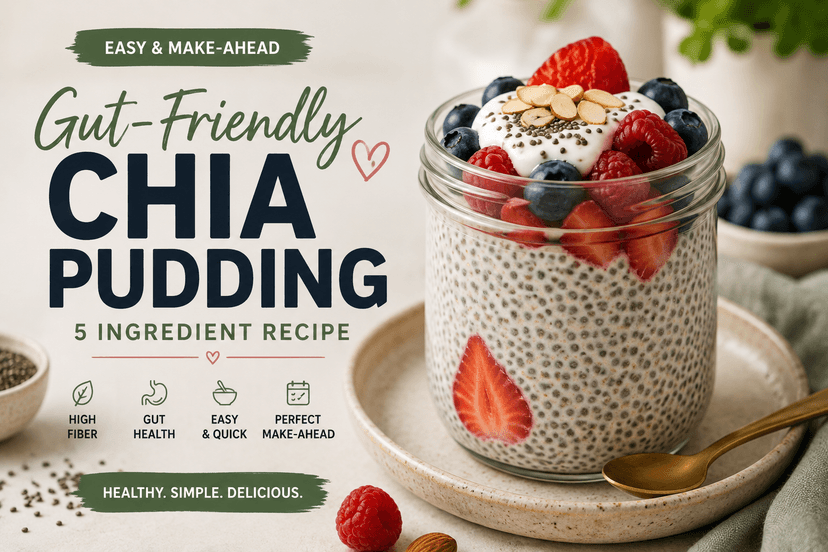
Gut-Friendly Chia Pudding Recipe
Creamy, simple, and easy to prepare ahead — this gut-friendly chia pudding combines chia seeds, Greek yogurt, berries and milk for a nourishing breakfast you can prepare the night before.

January 12, 2026
5 Gut-Friendly Recipes to Start Your Reset
A gut-friendly breakfast, lunch, snack, dinner, and bonus smoothie — the same five recipes from our free guide, straight from the PDF.
Want a Complete 14-Day Plan?
If you would rather follow a structured plan than figure out every meal yourself, the 14-Day Gut Reset brings the meals, grocery list and tracker together in one simple system.
Get the 14-Day Gut Reset