 The Well Nourish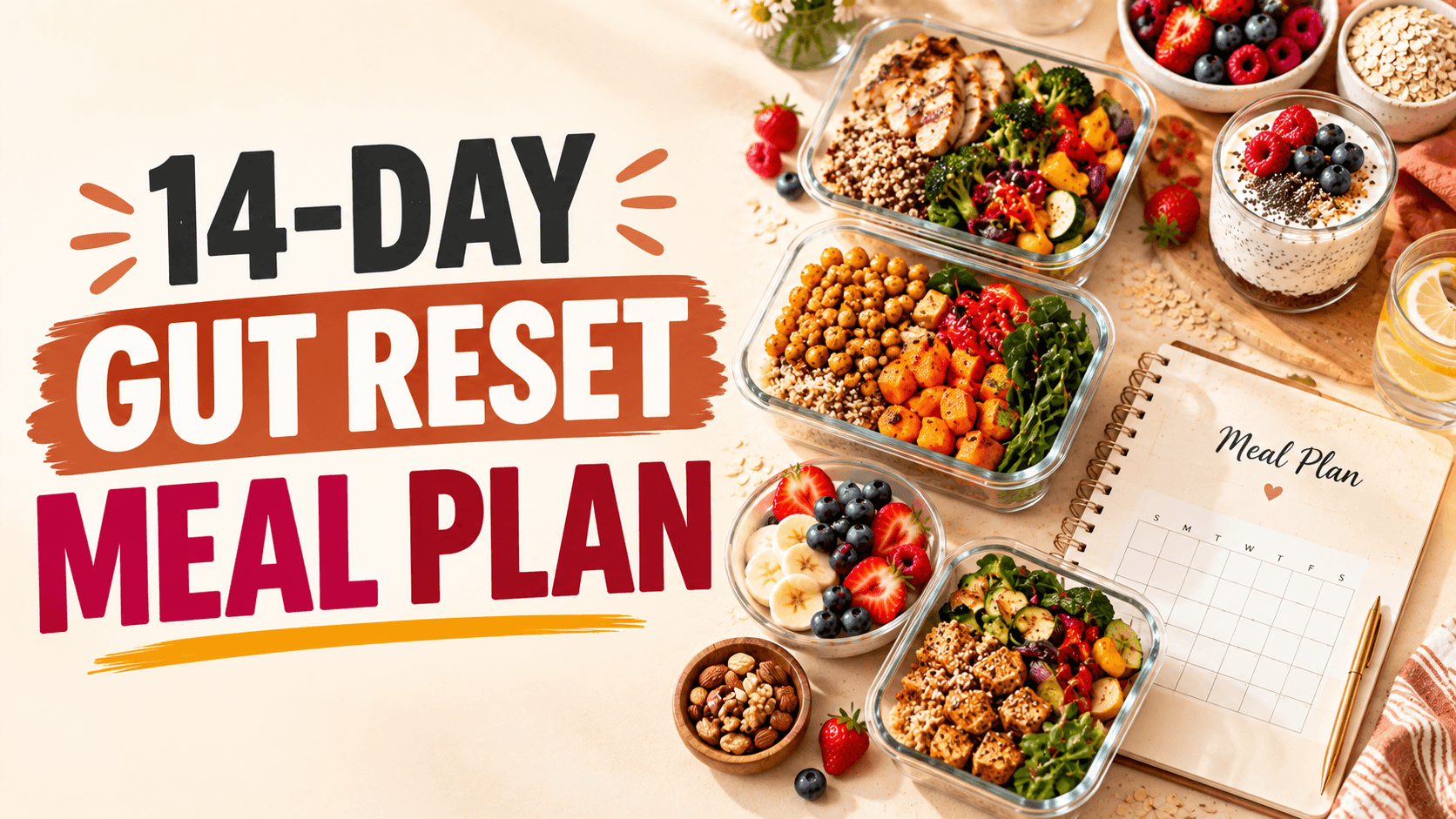
March 30, 2026
14-Day Gut Reset Meal Plan: A Simple Guide to More Comfortable Eating
Save this article for later! And if you find it helpful, save the Pin so you can easily find it again.
When your digestion feels unpredictable, planning meals can become frustrating. You may find yourself asking what to eat for breakfast, which foods will keep you satisfied, whether to avoid certain ingredients, and how to eat better without cooking all day.
A 14-day gut reset meal plan is a simple framework for creating regular meals, choosing balanced ingredients, preparing food ahead of time, and observing how your body responds. It is not a detox, a starvation plan, or a guarantee that every digestive symptom will disappear. The purpose is to create a more predictable routine.
Instead of changing your entire diet overnight, focus on meals that are familiar, practical, and comfortable for you, and make gradual adjustments rather than removing many foods at once. For more background, read What Is a 14-Day Gut Reset?.
What Is a 14-Day Gut Reset Meal Plan?
A 14-day gut reset meal plan is a short-term eating structure designed to support consistent, balanced meals while helping you notice patterns in your digestion. It may include:
- •Regular breakfast, lunch, and dinner
- •Optional snacks based on hunger
- •A variety of protein sources
- •Carbohydrates such as rice, oats, potatoes, and grains
- •Fruits and vegetables
- •Gradual increases in fiber
- •Adequate fluids
- •Simple meal-preparation habits
- •A food and symptom journal
The plan is not intended to diagnose food intolerances or treat a digestive condition. If you have persistent symptoms, you may need individual advice from a healthcare professional or registered dietitian. You do not need expensive ingredients or complicated recipes — just a few reliable meals you can prepare consistently.
How to Use This 14-Day Meal Plan
Start with foods you already tolerate. This is not the ideal time to introduce ten unfamiliar ingredients at once. Keep portions flexible — your appetite and energy needs may vary day to day.
Increase fiber gradually. Foods such as oats, beans, lentils, chia seeds, vegetables, and whole grains can be part of a balanced diet, but suddenly increasing fiber may cause gas or bloating. Drink fluids throughout the day unless you have been advised to limit them.
Avoid making every meal perfect. A meal plan should reduce stress, not create more of it. If you miss a meal-prep session or eat something different, simply return to your routine at the next meal.
Days 1–3: Create a Simple Foundation
The first three days focus on regular meals and familiar ingredients. Keep preparation simple and avoid making major dietary changes all at once.
Day 1
Daily focus: Eat slowly and notice how you feel after each meal.
Day 2
Daily focus: Drink fluids throughout the day and avoid eating very quickly.
Day 3
Daily focus: Notice whether smaller, regular meals feel more comfortable than very large meals.
Days 4–7: Add More Variety
Continue the regular meal structure while adding more variety. You can experiment with different protein sources, vegetables, grains, and preparation methods.
Day 4
Daily focus: Introduce only one major new ingredient if you are trying to identify food patterns.
Day 5
Daily focus: Choose meals that are easy to prepare and repeat.
Day 6
Daily focus: Pay attention to how different cooking methods affect your comfort.
Day 7
Daily focus: Review the first week. Which meals felt easy, satisfying, and comfortable?
Days 8–10: Continue the Routine and Observe Patterns
By the second week, you may have a better idea of which meals are easiest for you to prepare and tolerate. The goal is not to become more restrictive — it is to become more aware of your patterns.
Free Guide
Want the Full 14-Day System?
Start with our free 3-Day Bloat Reset — days 1–3 of the 14-Day Gut Reset, straight to your inbox.
We respect your privacy. Unsubscribe at anytime.
Day 8
Daily focus: Notice whether you feel more comfortable when you eat at regular times.
Day 9
Daily focus: Keep portions moderate and avoid eating until you feel uncomfortably full.
Day 10
Daily focus: Notice whether certain combinations of ingredients feel heavier than others.
Days 11–14: Build a Routine You Can Continue
The final four days focus on creating meals that you may want to repeat after the reset ends.
Day 11
Daily focus: Choose one meal to prepare in advance for the next day.
Day 12
Daily focus: If you are increasing fiber, continue gradually rather than making another sudden change.
Day 13
Daily focus: Notice whether meal preparation has become easier compared with the beginning of the reset.
Day 14
Daily focus: Review the full two weeks and identify the habits you want to continue.
Easy Snack Ideas for Your Gut Reset
Snacks are optional. If you are hungry between meals, choose something that helps you feel satisfied.
- •Plain yogurt
- •A banana
- •Kiwi or berries
- •Rice cakes with nut butter
- •Whole-grain crackers with cheese
- •A boiled egg
- •Toast with peanut butter
- •A small handful of nuts
- •Oatcakes
- •Fruit with yogurt
If you notice that large snacks make you less hungry for meals, reduce the portion or adjust the timing.
Simple Meal-Prep Tips for the 14 Days
Meal planning becomes easier when you prepare a few basic ingredients instead of cooking every meal from scratch. Cook a batch of rice for several meals and store it safely in the refrigerator. Prepare protein in advance — chicken, fish, tofu, or eggs.
Wash and cut produce ahead of time. Make one simple soup that can provide several easy lunches or dinners. Keep breakfast ingredients ready where they are easy to access, and use leftovers to become rice bowls, wraps, soups, or simple plates the next day. The goal is to reduce decision fatigue, not to create a complicated meal-prep routine.
How to Adjust the Meal Plan for Your Needs
If you prefer vegetarian meals, use eggs, tofu, tempeh, yogurt, lentils, beans, and other plant-based protein sources. Introduce beans and lentils gradually if your usual diet contains little fiber.
If you avoid dairy, try lactose-free yogurt, fortified soy yogurt, plant-based milk, or other alternatives that suit you. If you prefer gluten-free foods, use rice, potatoes, gluten-free oats, quinoa, and gluten-free bread or wraps.
If you have a small budget, choose affordable staples such as oats, rice, eggs, potatoes, seasonal produce, lentils, frozen vegetables, canned fish, and plain yogurt. A gut-friendly meal plan does not need expensive superfoods.
Common Mistakes to Avoid
- •Eating the same few foods every day — variety can make the plan more enjoyable and help you include different nutrients.
- •Making portions too small — if you are constantly hungry, increase your portions or add a snack.
- •Increasing fiber too quickly — adding several high-fiber foods at once may cause discomfort.
- •Drinking too little water — fiber and fluids work together in normal digestion.
- •Removing foods without a clear reason — individual tolerance varies.
- •Expecting every symptom to disappear — persistent symptoms require professional evaluation.
When to Seek Medical Advice
A meal plan should not be used to self-treat serious or persistent symptoms. Speak with a healthcare professional if you experience ongoing or severe abdominal pain, persistent bloating, blood in your stool, unexplained weight loss, repeated vomiting, significant changes in bowel habits, persistent diarrhea or constipation, difficulty eating normally, or symptoms that interfere with daily life.
Seek urgent medical care for severe abdominal pain, vomiting blood, black stools, fainting, or other serious symptoms.
The Bottom Line
A 14-day gut reset meal plan can help you create a more consistent eating routine without relying on extreme restrictions. The most important parts are simple: eat regular meals, choose balanced ingredients, increase fiber gradually, drink fluids consistently, eat slowly, prepare a few meals ahead, and notice patterns without judging yourself.
You do not need to follow every meal perfectly. The purpose of the plan is to make your routine easier, more organized, and more sustainable.
Frequently Asked Questions
Can I follow this meal plan if I am new to gut-friendly eating?
Yes. The plan is designed as a flexible starting point. Begin with familiar foods and adjust portions or ingredients according to your needs.
Will this meal plan stop bloating?
It may help some people notice improvements in comfort, especially if their symptoms are related to irregular meals, large portions, or sudden dietary changes. However, it cannot guarantee that bloating will stop.
Do I need to avoid gluten during a gut reset?
No. Gluten does not need to be removed unless you have a medical reason or have been advised to avoid it by a healthcare professional.
Can I eat snacks during the reset?
Yes. Snacks are optional and can be included when you are hungry between meals.
Can I repeat meals?
Absolutely. Repeating easy meals is one of the best ways to make meal planning more practical.
What if one of these foods makes me uncomfortable?
Replace it with another food you tolerate well. Avoid assuming that the entire meal plan has failed because of one ingredient.
Can I drink coffee during the reset?
You may be able to continue drinking coffee if you tolerate it well. If it seems to worsen your symptoms, consider reducing the amount or changing the timing.
What should I do after the 14 days?
Keep the habits that helped you feel more comfortable and gradually return to a varied, flexible eating routine.
Keep Exploring
April 6, 2026
What Is a 14-Day Gut Reset? A Beginner's Guide to Better Digestion
A 14-day gut reset is not a detox or a starvation plan. It's a short, structured period focused on simple meals, consistent habits, hydration, and noticing how your body responds.
March 23, 2026
What to Eat During a Gut Reset: A Practical Guide to Comfortable, Balanced Meals
There is no universal gut-reset menu. Here are the foods worth building meals around, the ones to introduce gradually, and the ones you do not automatically need to avoid.
March 16, 2026
Beginner's Guide to a Gut-Friendly Meal Plan: Simple Steps for Better Eating Habits
How to build a simple gut-friendly meal plan from scratch — a balanced-meal formula, three-of-each meal rotation, easy food swaps, and a flexible 7-day sample plan.
Want a Complete 14-Day Plan?
If you are tired of guessing what to eat, planning meals from scratch, or starting over every Monday, the 14-Day Gut Reset brings practical meals, a grocery list, and a simple tracker together in one place.
Get the 14-Day Gut Reset