 The Well Nourish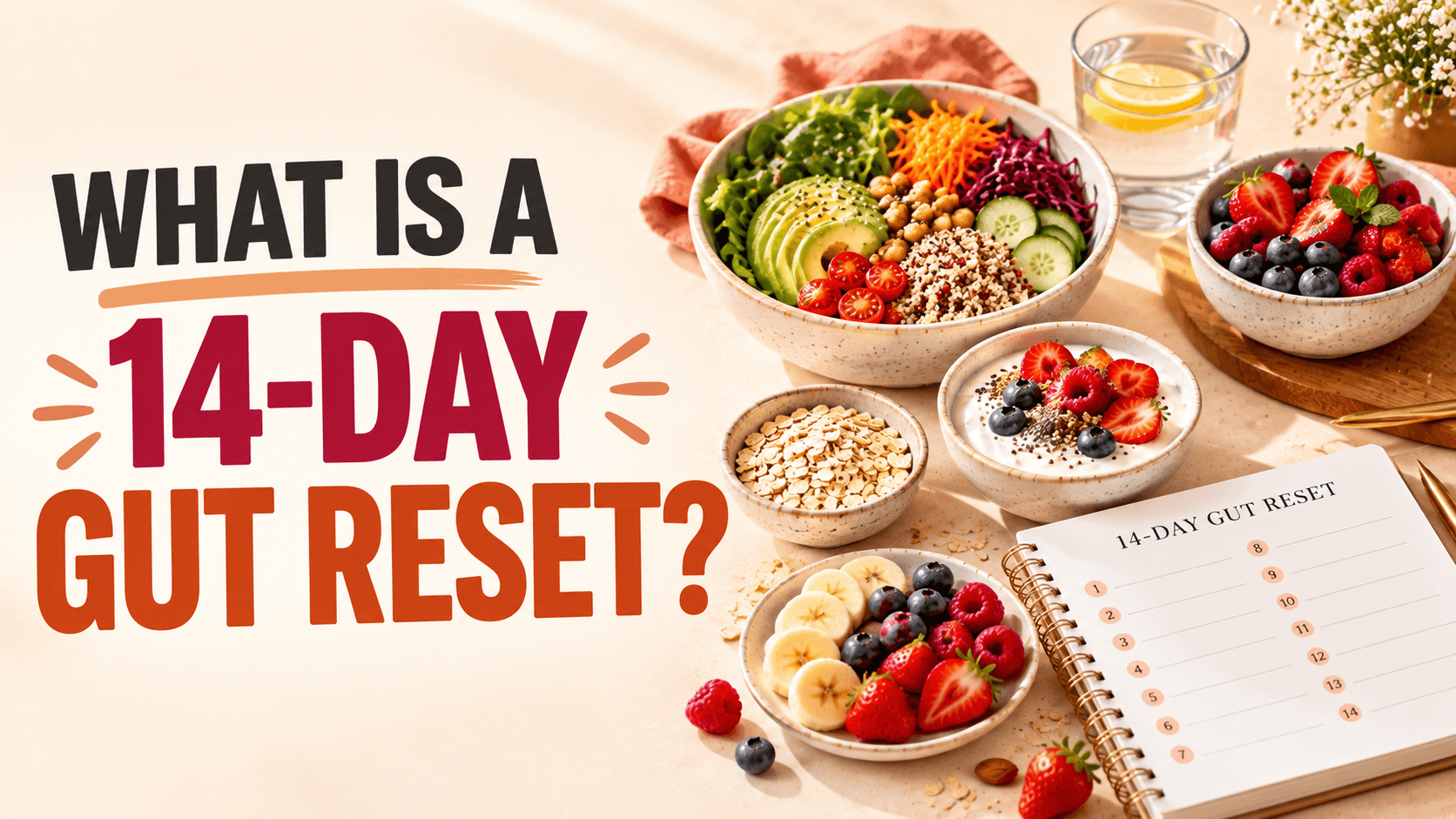
April 6, 2026
What Is a 14-Day Gut Reset? A Beginner's Guide to Better Digestion
Save this article for later! And if you find it helpful, save the Pin so you can easily find it again.
If you have been dealing with bloating, irregular digestion, uncomfortable meals, or the feeling that your eating routine is no longer working for you, you may have come across the phrase "14-day gut reset." The name can sound intense — a strict detox, a juice-only plan, or two weeks of trying to "clean out" your digestive system.
But a practical gut reset does not need to be extreme. It is better understood as a short, structured period in which you focus on simple meals, consistent eating habits, hydration, gentle movement, and noticing how your body responds to different foods.
The purpose is not to promise that every digestive symptom will disappear in two weeks. It is to help you create a more predictable routine and identify habits that may be contributing to discomfort. Instead of asking "How can I eat as little as possible?" a better question is: how can I make my meals, schedule, and daily habits easier for my body to manage?
What Is a 14-Day Gut Reset?
A 14-day gut reset is a short-term wellness plan designed to help you establish more consistent, digestion-supportive habits. It may include:
- •Eating regular meals
- •Choosing simple, balanced foods
- •Increasing fiber gradually
- •Drinking enough fluids
- •Eating more slowly
- •Reducing unnecessary meal-related stress
- •Including gentle daily movement
- •Tracking food patterns and symptoms
- •Identifying foods or habits that may not suit you
The central idea is consistency rather than restriction. A gut reset should not be treated as a medical cure or a replacement for professional care. Think of it as a structured experiment — two weeks to simplify your routine, observe patterns, and build habits you may want to continue afterward.
Why Do People Try a Gut Reset?
People often try a gut reset because their eating routine feels unpredictable. You may notice that:
- •You feel bloated after certain meals
- •You skip breakfast and become overly hungry later
- •You eat quickly because your schedule is busy
- •You rely heavily on takeout or convenience foods
- •You do not drink enough water
- •You suddenly increase fiber and feel uncomfortable
- •You are unsure which foods work well for you
- •You keep changing diets without following one routine long enough to evaluate it
Sometimes the problem is not one "bad" food — it may be the overall pattern. A reset gives you an opportunity to look at the whole routine rather than blaming one ingredient.
What a 14-Day Gut Reset Is Not
- •It is not a detox — your body already has systems that process and remove waste.
- •It is not a starvation plan — it should provide enough food to support your daily needs.
- •It is not a guaranteed cure for bloating — bloating can be related to food habits, constipation, food intolerances, hormonal changes, stress, or medical conditions.
- •It is not about eliminating every possible trigger — removing many foods at once can make meals unnecessarily restrictive.
- •It is not a permanent diet — the goal is to build a flexible routine you can continue after the 14 days.
The Main Principles of a Practical Gut Reset
Eat regularly. Skipping meals may lead to intense hunger later, which can make you eat quickly or choose a much larger meal than planned. Try to create a consistent rhythm that works with your schedule — breakfast, lunch, dinner, and one or two snacks if needed. For breakfast inspiration, explore Gut-Friendly Breakfast Ideas.
Build balanced meals. A simple plate may include a source of protein, a carbohydrate such as rice, oats, potatoes, or whole grains, vegetables or fruit, a moderate amount of healthy fat, and fluids.
Increase fiber gradually. If your usual diet contains very little fiber, adding large portions of beans, bran, chia seeds, vegetables, and whole grains all at once may feel uncomfortable. Add one fiber-rich food at a time, begin with a moderate portion, drink enough fluids, and increase gradually if comfortable. Learn more in Easy High-Fiber Breakfasts.
Drink enough fluids, eat more slowly, include gentle movement such as a short walk after a meal, and prioritize sleep and stress management. Digestion does not happen separately from the rest of your body.
What Can You Eat During a 14-Day Gut Reset?
There is no single food list that works for everyone. A practical reset usually focuses on foods you already tolerate well, prepared in simple ways.
Protein sources may include eggs, chicken, fish, tofu, plain yogurt, lean meat, and lentils or beans if tolerated. Carbohydrate sources include oats, rice, potatoes, sweet potatoes, whole-grain bread, quinoa, and pasta — carbohydrates are not something you need to remove.
Choose a variety of fruits and vegetables, paying attention to portion size and preparation. Some people find cooked vegetables easier to tolerate than large amounts of raw vegetables. Include moderate amounts of healthy fats such as olive oil, avocado, nuts, seeds, nut butter, and fatty fish. Your personal tolerance matters more than following a universal list. For more detail, read What to Eat During a Gut Reset.
Free Guide
Want the Full 14-Day System?
Start with our free 3-Day Bloat Reset — days 1–3 of the 14-Day Gut Reset, straight to your inbox.
We respect your privacy. Unsubscribe at anytime.
Foods You May Want to Experiment With Carefully
A reset does not require you to avoid every food that can cause digestive symptoms. However, you may want to introduce certain foods gradually if you know they sometimes affect you.
- •Very large portions of beans
- •Large amounts of raw vegetables
- •Excessive amounts of artificial sweeteners
- •Very rich or greasy meals
- •Large servings of dried fruit
- •Sudden increases in chia seeds or flaxseed
- •Foods you have previously noticed cause discomfort
The important word is experiment. Avoiding a food permanently based on one uncomfortable experience may not be necessary.
A Simple 14-Day Gut Reset Structure
A useful way to organize the reset is to divide it into phases.
The reset should end with more clarity — not another strict set of rules.
How to Track Your Symptoms Without Becoming Obsessed
A simple food journal can help you notice patterns, but it should not become a source of stress. You can record what you ate, approximately when, portion size, how quickly you ate, your comfort level afterward, bowel movements, sleep quality, and stress level.
You do not need to record every calorie or weigh every ingredient. For example, you may notice that discomfort is more common after very large meals, when you skip breakfast, or when you eat quickly. That information can be more useful than labeling one food as "good" or "bad."
Common Mistakes During a Gut Reset
- •Trying to change everything overnight — choose a few priorities first.
- •Eating too little — a reset should not leave you constantly hungry or exhausted.
- •Removing too many foods — highly restrictive plans can make it difficult to meet your nutritional needs.
- •Increasing fiber too quickly — your body may need time to adjust.
- •Expecting immediate results — two weeks can help you observe patterns, but it is not a guarantee of immediate improvement.
- •Treating every symptom as a food intolerance — digestive symptoms can have many causes.
- •Following a plan that does not fit your life — the best plan is one you can actually follow.
When to Seek Medical Advice
Digestive discomfort should not always be managed through diet changes alone. Speak with a healthcare professional if you experience persistent or severe abdominal pain, ongoing bloating that does not improve, blood in your stool, unexplained weight loss, repeated vomiting, difficulty swallowing, significant changes in bowel habits, persistent diarrhea or constipation, or symptoms that interfere with daily life.
Seek urgent medical care for severe pain, fainting, vomiting blood, black stools, or other serious symptoms. A gut reset is a wellness routine — not a substitute for diagnosis or treatment.
The Bottom Line
A 14-day gut reset is best understood as a short period of practical habit-building. It can help you focus on regular meals, balanced foods, gradual fiber changes, hydration, slower eating, gentle movement, and noticing patterns in your digestion.
The goal is not to punish your body or eliminate every food. It is to create a calmer, more predictable routine that you can continue beyond the two weeks. You do not need a perfect diet to support better digestion — you need a realistic plan, consistent habits, and enough flexibility to respond to your individual needs.
Frequently Asked Questions
Can a 14-day gut reset improve bloating?
A structured routine may help some people notice improvements in comfort, especially if their symptoms are related to irregular meals, large portions, rushed eating, or sudden dietary changes. However, results vary, and persistent bloating may require professional evaluation.
Is a gut reset the same as a detox?
No. A practical gut reset focuses on consistent eating habits and lifestyle routines. It does not require detox drinks, starvation, or extreme restrictions.
Can I eat carbohydrates during a gut reset?
Yes. Carbohydrates such as oats, rice, potatoes, bread, and grains can be part of a balanced eating pattern.
Should I avoid dairy?
Not necessarily. If you tolerate dairy, you may be able to include it. If dairy repeatedly causes symptoms, consider discussing alternatives with a healthcare professional.
Can I drink coffee during a gut reset?
You may be able to continue drinking coffee if you tolerate it well. If coffee seems to worsen your symptoms, experiment with reducing the amount or changing the timing.
Do I need to avoid gluten?
Not everyone needs to avoid gluten. Removing it without a clear reason may make your diet more restrictive. If you suspect a medical condition related to gluten, speak with a healthcare professional before making major changes.
Is 14 days enough to fix my digestion?
Two weeks can be enough to establish new habits and notice some patterns, but it is not enough to diagnose or resolve every digestive concern. Digestive health is influenced by many factors and may require longer-term support.
What should I do after the 14 days?
Keep the habits that helped you feel more comfortable and gradually return to a flexible, varied eating routine. You do not need to remain on a restrictive reset plan.
Keep Exploring
March 30, 2026
14-Day Gut Reset Meal Plan: A Simple Guide to More Comfortable Eating
A flexible two-week meal plan with breakfast, lunch, dinner, and snack ideas — plus prep tips and ways to adapt it — designed to make eating more consistent, not more complicated.
March 23, 2026
What to Eat During a Gut Reset: A Practical Guide to Comfortable, Balanced Meals
There is no universal gut-reset menu. Here are the foods worth building meals around, the ones to introduce gradually, and the ones you do not automatically need to avoid.

March 16, 2026
Beginner's Guide to a Gut-Friendly Meal Plan: Simple Steps for Better Eating Habits
How to build a simple gut-friendly meal plan from scratch — a balanced-meal formula, three-of-each meal rotation, easy food swaps, and a flexible 7-day sample plan.
Want a Complete 14-Day Plan?
If you are tired of guessing what to eat, planning meals from scratch, or starting over every Monday, the 14-Day Gut Reset brings practical meals, a grocery list, and a simple tracker together in one place.
Get the 14-Day Gut Reset